


WHY IT’S IMPORTANT
In the U.S., 30-40% of our food supply is wasted, straining our budgets and our climate. Reducing the amount of food wasted ensures that more people are fed, money spent on meals isn’t wasted, and mitigates environmental impacts. Food waste contributes to carbon emissions from landfills, one of the largest sources of emissions. Avoiding food waste, repurposing useable food or composting food scraps are all tactics to divert food waste from landfill and improve your event’s impact on the environment.
Composting is important to reducing carbon emissions and preserving the capacity of our landfills. The U.S. Environmental Protection Agency (EPA) estimates that 20-30% of what we throw away at home could instead be composted. Food rotting in the landfill releases methane gas, which is roughly 84 times more potent as a heat trapping gas than carbon dioxide over the course of 20 years, according to the IPCC’s Fifth Assessment Report. Additionally, when food is composted, it sequesters carbon back into the ground, acting as a carbon sink. Composting also creates a nutrient-rich soil amendment, reducing the need for synthetic fertilizer. Healthy soils better absorb water, which reduces runoff, leading to fewer toxins making their way into the water. Composting, when done correctly, can make a huge difference.
There are many ways to achieve this Best Practice – so pick what works best for your event!
HOW TO DO IT
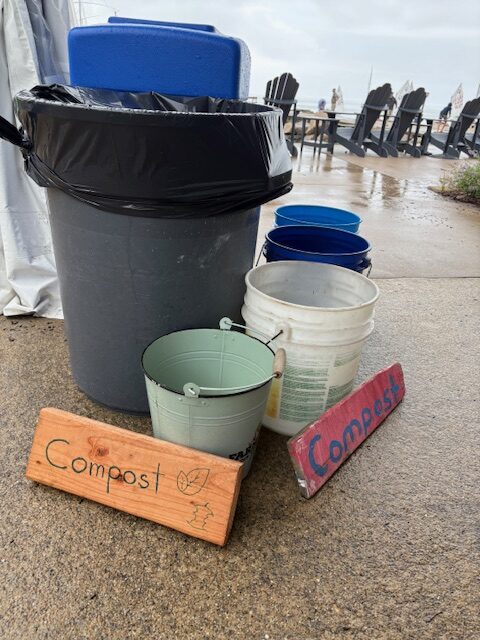
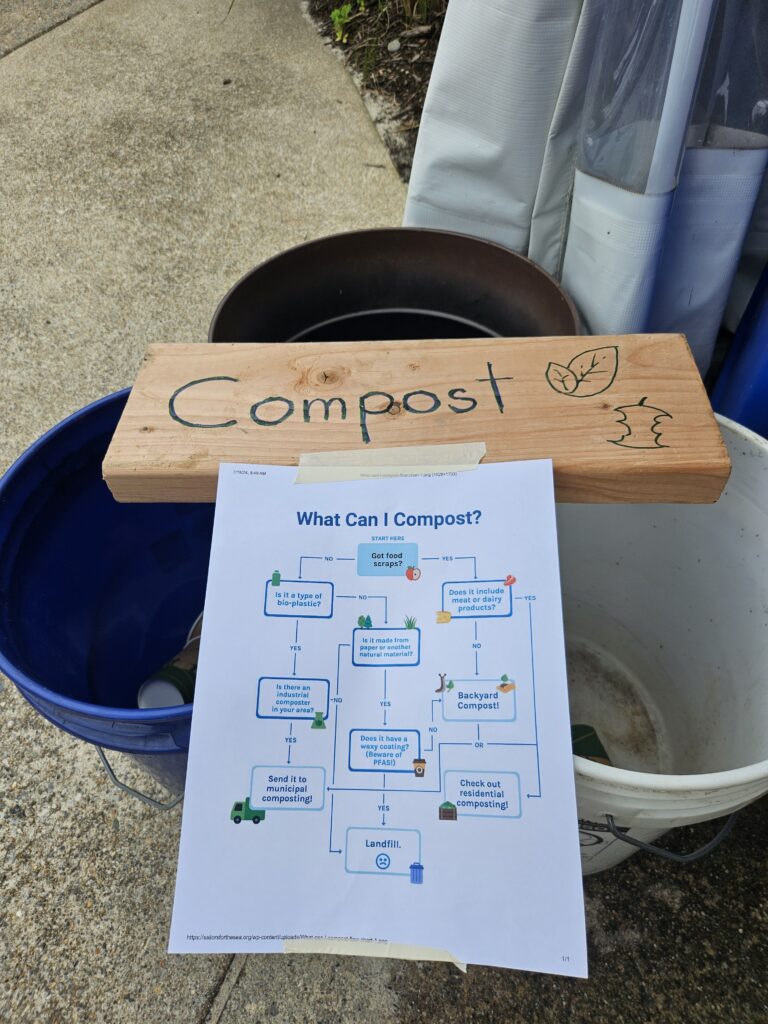
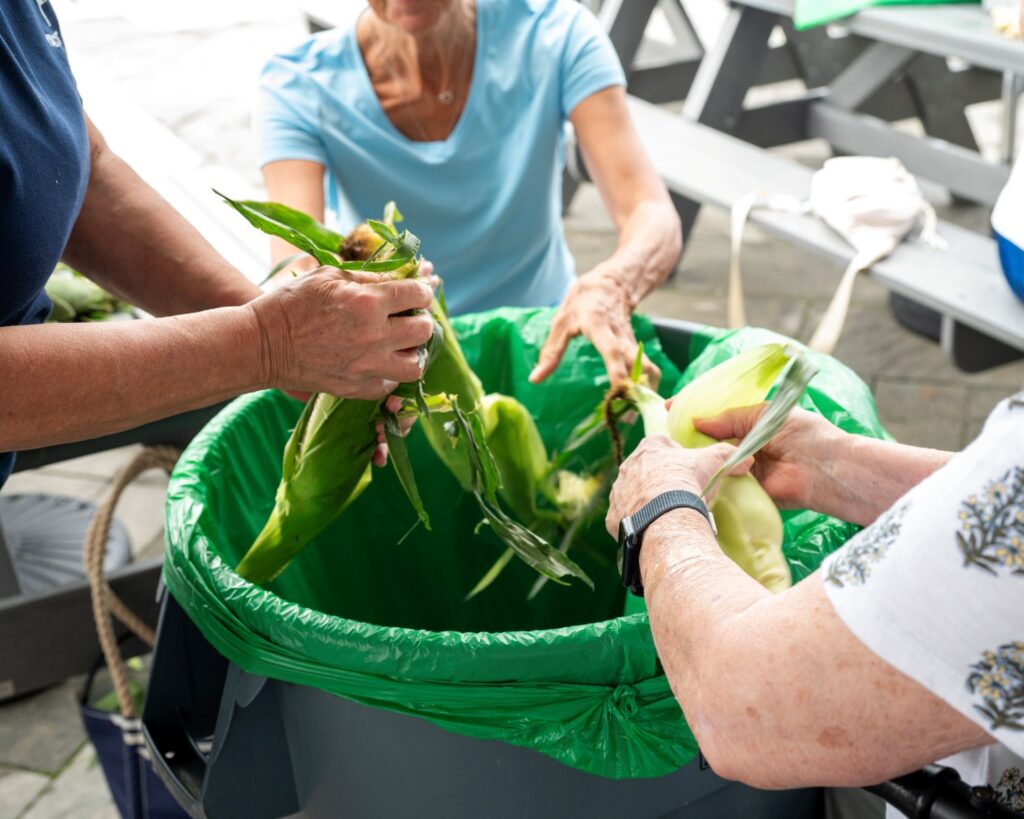
- If your organization is equipped to compost in your own “backyard”, we recommend collecting only fruits, vegetables and grains and staying away from dairy and meat. If you are sending your food scraps elsewhere, communicate with collectors to learn what they will accept.
- If you can coordinate with other composting groups, they might use industrial composters. This machine utilizes a process called anaerobic digestion, which breaks down biodegradable material without oxygen. This process is more intense than “backyard” composting and can often handle more than just food scraps (including meat and dairy), such as the “bioplastics”. However, double check the facility will accept bioplastics, as they can degrade the health of the soil.
- If you can’t compost, donate any untouched leftovers to a food pantry or shelter or encourage participants to only take what they can eat.
- Register your event and download the Clean Regattas Toolkit for more information!

If you would like to share how you’ve achieved this Best Practice, please share your solution below. If you’re looking for help on this topic, you can ask your question to our community of Clean Regatta Organizers.
REGISTER NOW


Leave a Reply
You must be logged in to post a comment.