

Event Details | |
| Host | Yacht Club of Greece |
| Location | Piraeus Greece, Greece |
| Certification Level | Platinum |
| Website Link | www.ycg.gr |
Best Practices Achieved
1. Eliminate Single-Use Water Bottles and Provide Water Refill Stations
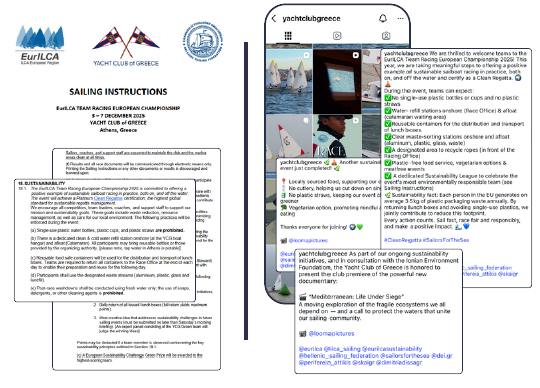
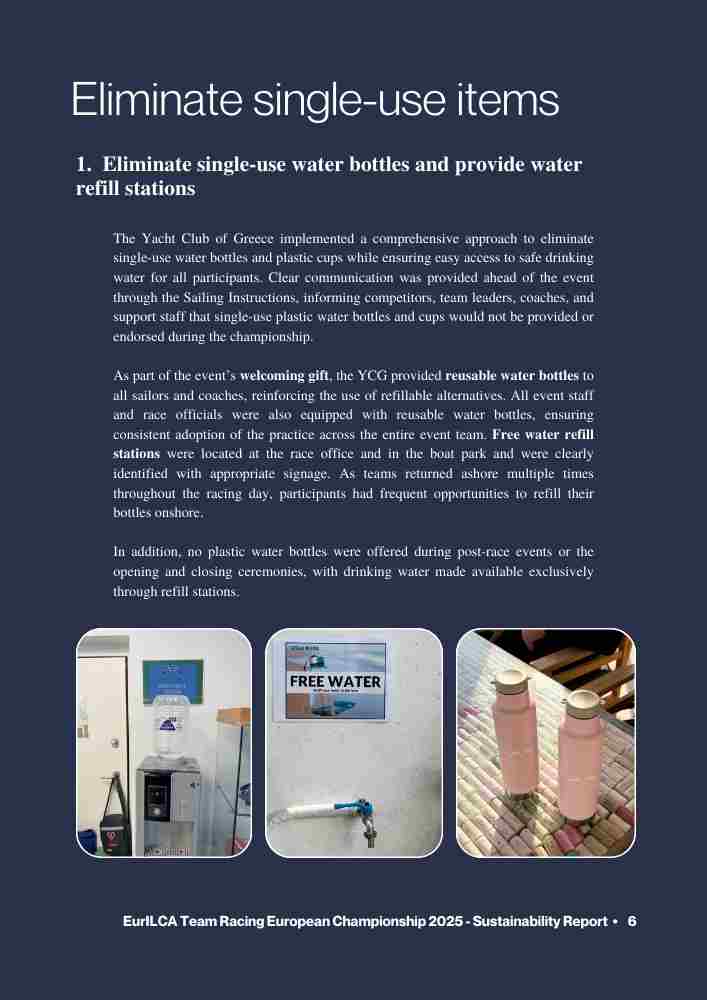
The Yacht Club of Greece implemented a comprehensive approach to eliminate single-use water bottles and plastic cups while ensuring easy access to safe drinking water for all participants. Clear communication was provided ahead of the event through the Sailing Instructions, informing competitors, team leaders, coaches, and support staff that single-use plastic water bottles and cups would not be provided or
endorsed during the championship.
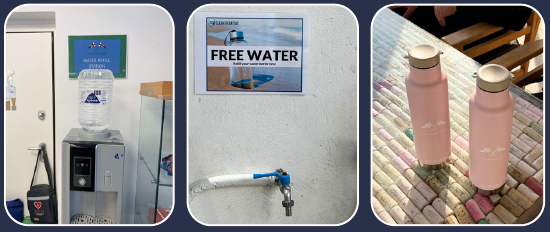
As part of the event’s welcoming gift, the YCG provided reusable water bottles to all sailors and coaches, reinforcing the use of refillable alternatives. All event staff and race officials were also equipped with reusable water bottles, ensuring consistent adoption of the practice across the entire event team. Free water refill stations were located at the race office and in the boat park and were clearly identified with appropriate signage. As teams returned ashore multiple times throughout the racing day, participants had frequent opportunities to refill their bottles onshore.
In addition, no plastic water bottles were offered during post-race events or the opening and closing ceremonies, with drinking water made vailable exclusively through refill stations.
2. Eliminate Plastic Straws
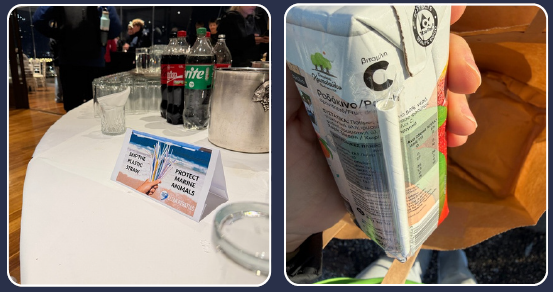
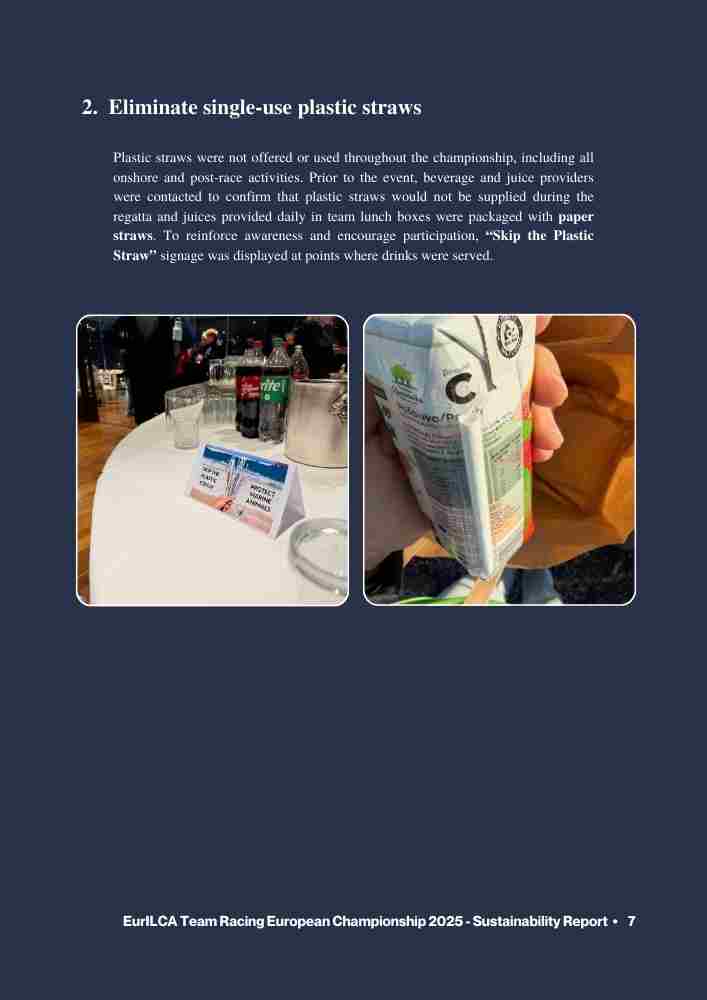
Plastic straws were not offered or used throughout the championship, including all onshore and post-race activities. Prior to the event, beverage and juice providers were contacted to confirm that plastic straws would not be supplied during the regatta and juices provided daily in team lunch boxes were packaged with paper straws. To reinforce awareness and encourage participation, “Skip the Plastic Straw” signage was displayed at points where drinks were served.
3. Serve Food with Plastic-Free Dinnerware
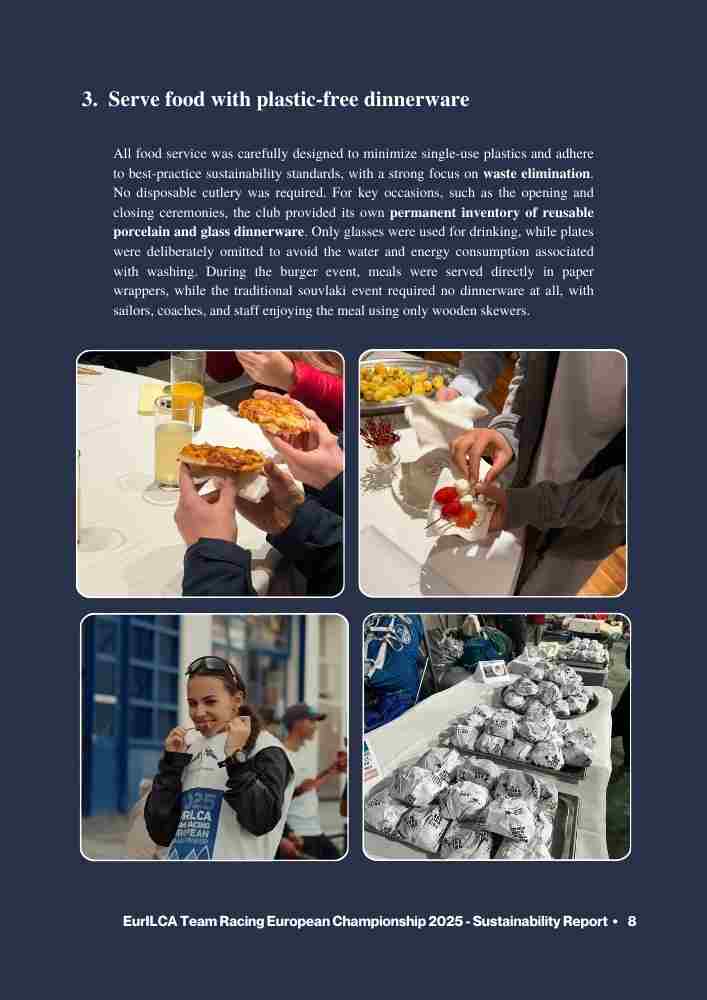
All food service was carefully designed to minimize single-use plastics and adhere to best-practice sustainability standards, with a strong focus on waste elimination.
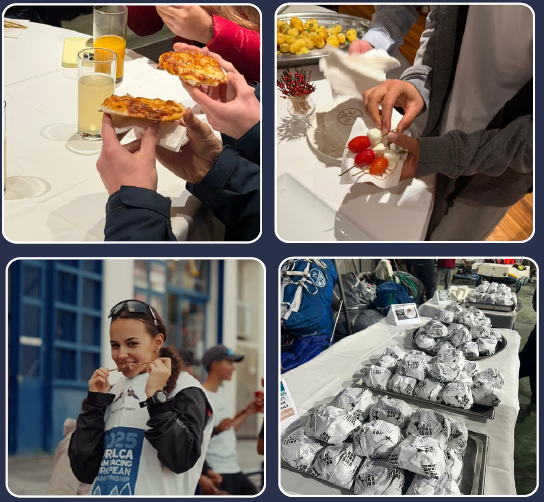
No disposable cutlery was required. For key occasions, such as the opening and closing ceremonies, the club provided its own permanent inventory of reusable porcelain and glass dinnerware. Only glasses were used for drinking, while plates were deliberately omitted to avoid the water and energy consumption associated with washing. During the burger event, meals were served directly in paper wrappers, while the traditional souvlaki event required no dinnerware at all, with sailors, coaches, and staff enjoying the meal using only wooden skewers.
4. Skip Bags or Go Reusable
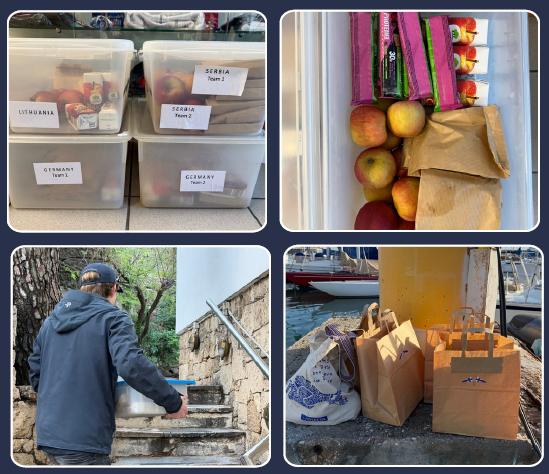
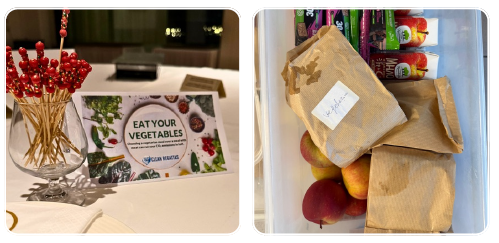
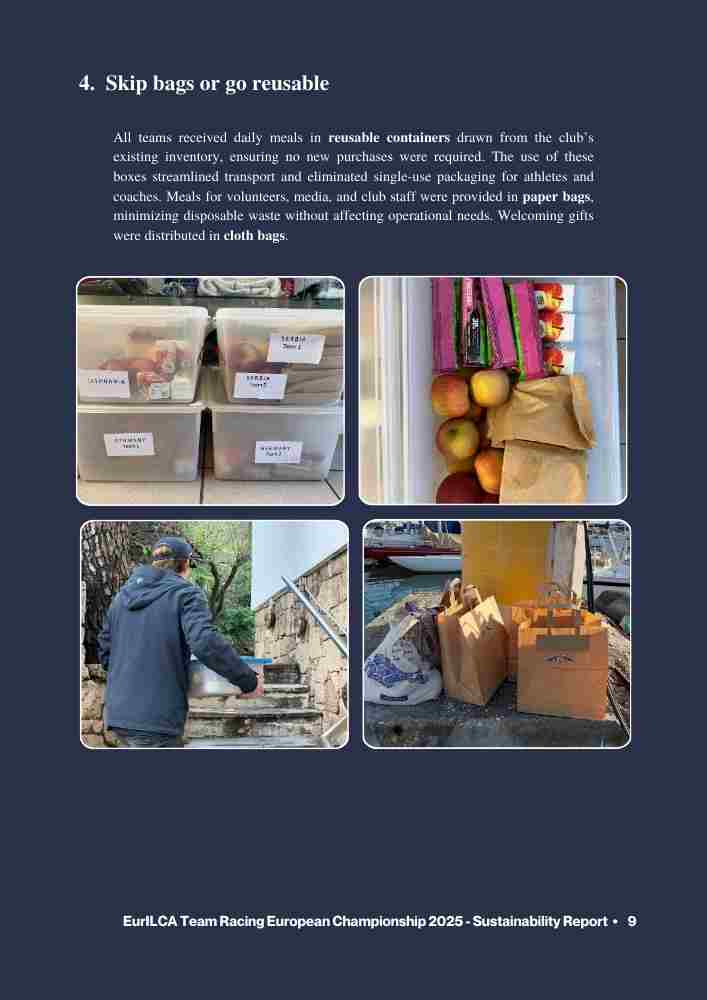
All teams received daily meals in reusable containers drawn from the club’s existing inventory, ensuring no new purchases were required. The use of these boxes streamlined transport and eliminated single-use packaging for athletes and coaches. Meals for volunteers, media, and club staff were provided in paper bags, minimizing disposable waste without affecting operational needs. Welcoming gifts were distributed in cloth bags.
5. Award Practical Items or Use a Perpetual or Upcycled Trophy
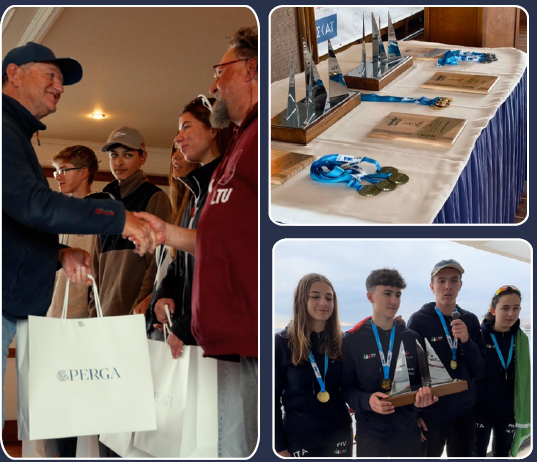
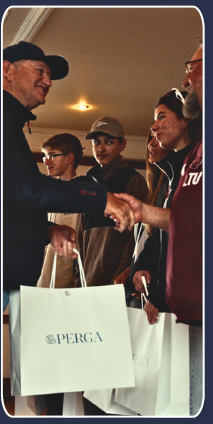
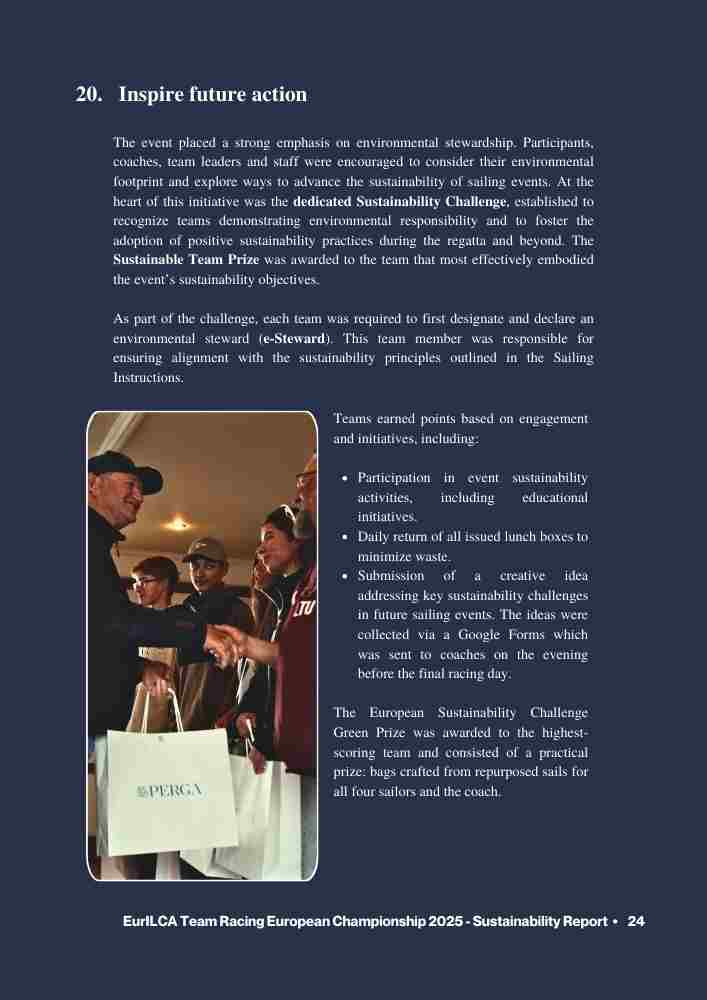
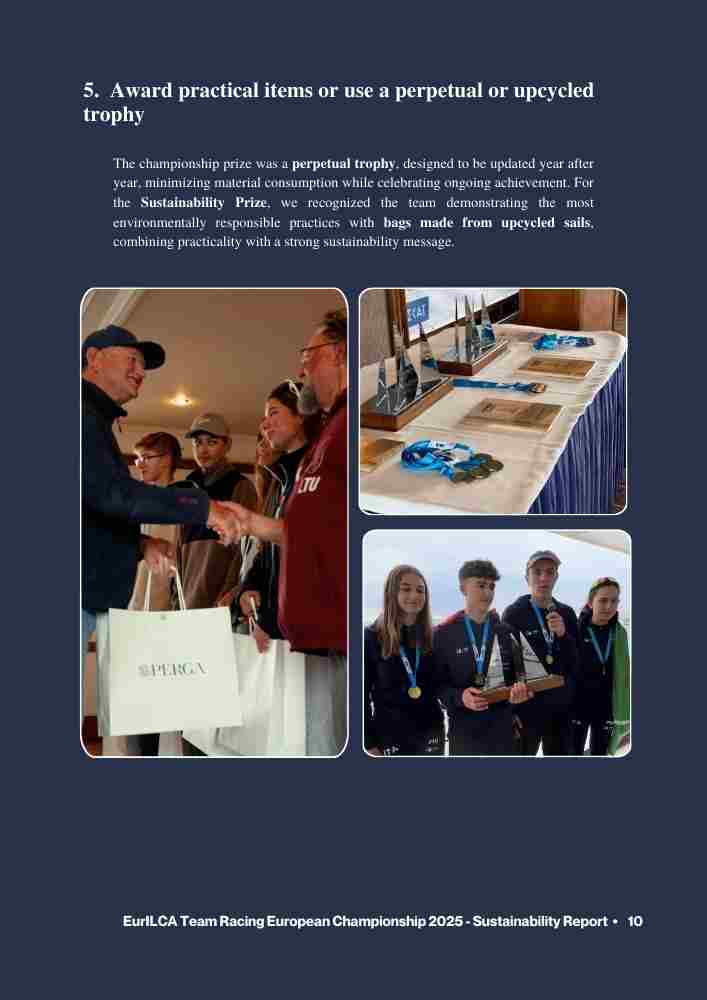
The championship prize was a perpetual trophy, designed to be updated year after year, minimizing material consumption while celebrating ongoing achievement. For the Sustainability Prize, we recognized the team demonstrating the most environmentally responsible practices with bags made from upcycled sails, combining practicality with a strong sustainability message.
6. Publicize Your Sustainability Efforts
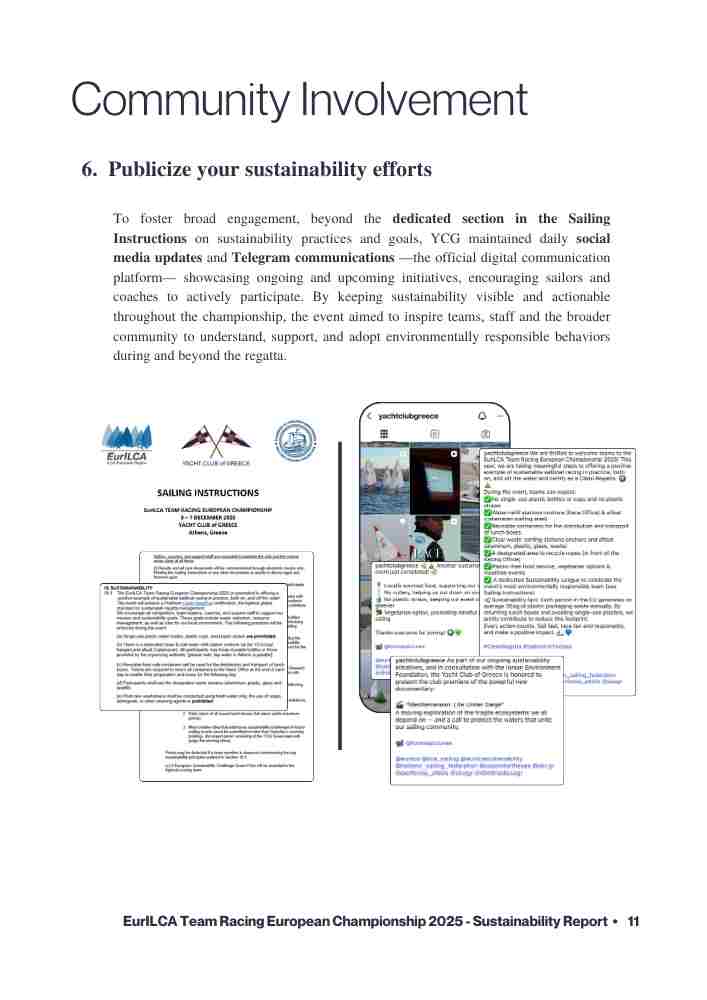
To foster broad engagement, beyond the dedicated section in the Sailing
Instructions on sustainability practices and goals, YCG maintained daily social media updates and Telegram communications —the official digital communication platform— showcasing ongoing and upcoming initiatives, encouraging sailors and coaches to actively participate. By keeping sustainability visible and actionable throughout the championship, the event aimed to inspire teams, staff and the broader community to understand, support, and adopt environmentally responsible behaviors
during and beyond the regatta.
7. Involve Local Organizations
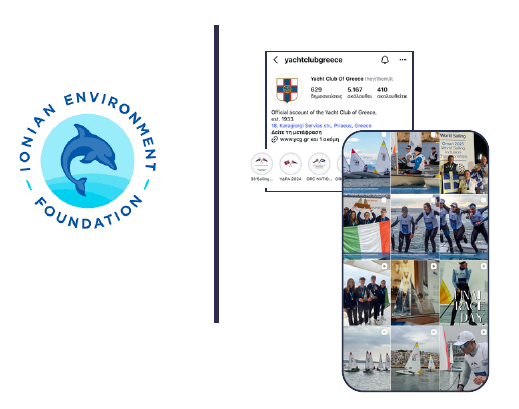
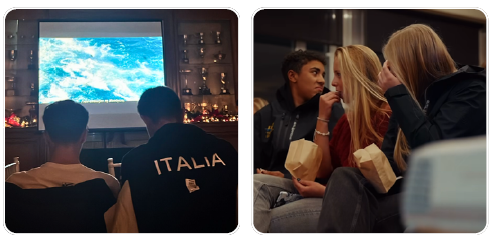
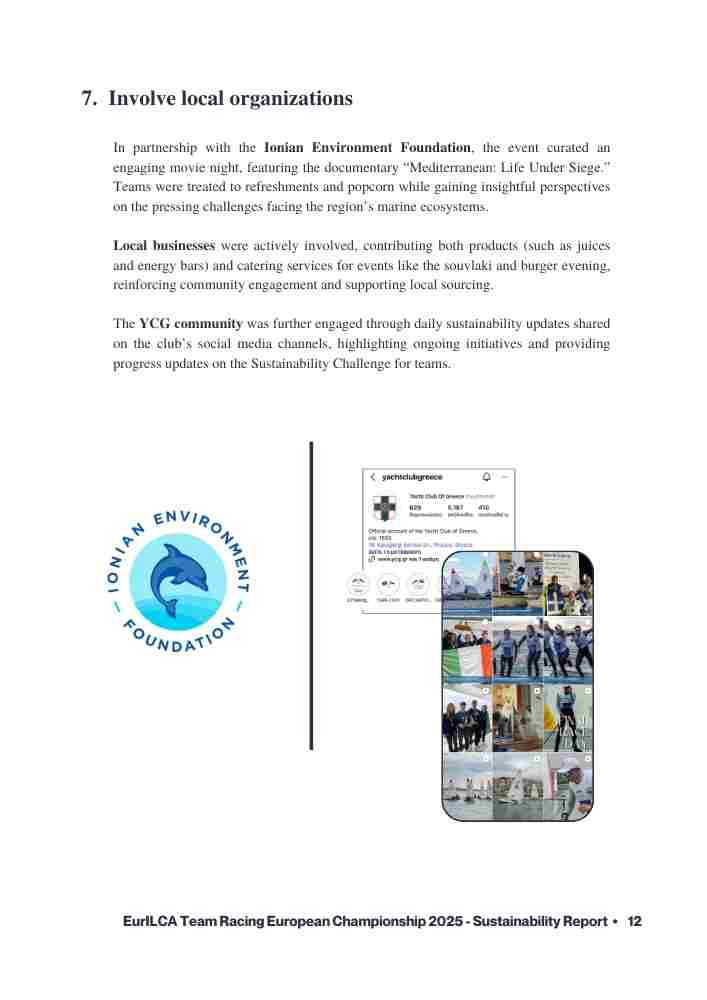
In partnership with the Ionian Environment Foundation, the event curated an engaging movie night, featuring the documentary “Mediterranean: Life Under Siege.”
Teams were treated to refreshments and popcorn while gaining insightful perspectives on the pressing challenges facing the region’s marine ecosystems.
Local businesses were actively involved, contributing both products (such as juices and energy bars) and catering services for events like the souvlaki and burger evening, reinforcing community engagement and supporting local sourcing.
The YCG community was further engaged through daily sustainability updates shared on the club’s social media channels, highlighting ongoing initiatives and providing progress updates on the Sustainability Challenge for teams.
8. Post Educational and Reusable Signage
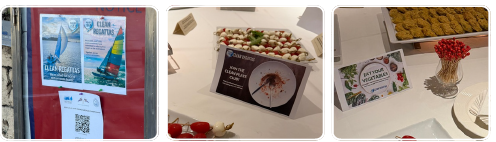
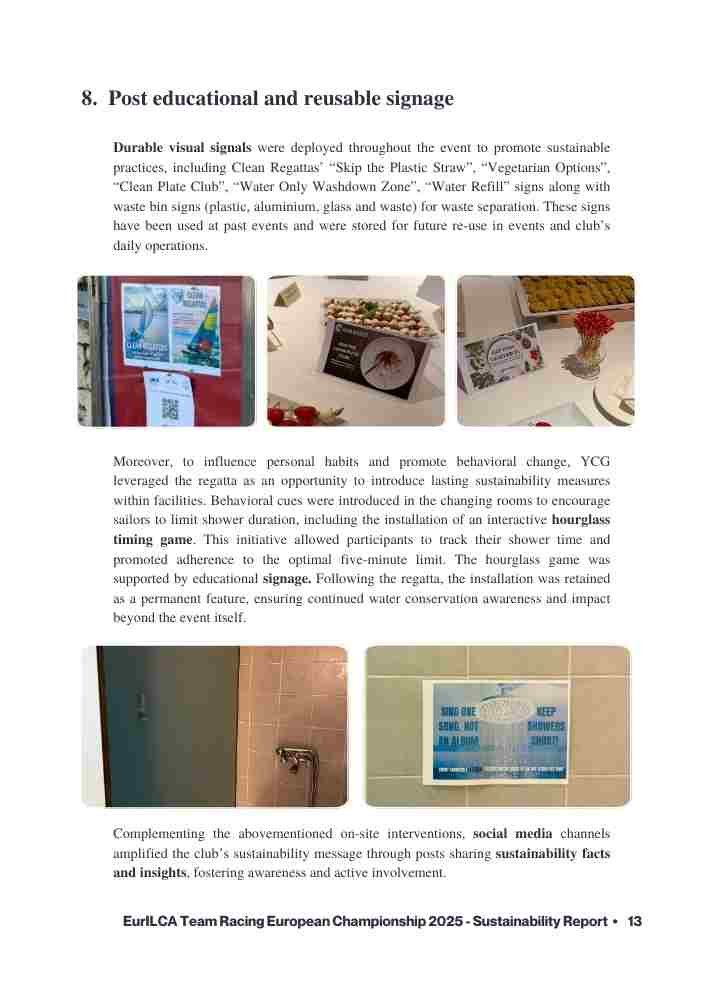
Durable visual signals were deployed throughout the event to promote sustainable practices, including Clean Regattas’ “Skip the Plastic Straw”, “Vegetarian Options”, “Clean Plate Club”, “Water Only Washdown Zone”, “Water Refill” signs along with waste bin signs (plastic, aluminium, glass and waste) for waste separation. These signs have been used at past events and were stored for future re-use in events and club’s daily operations.
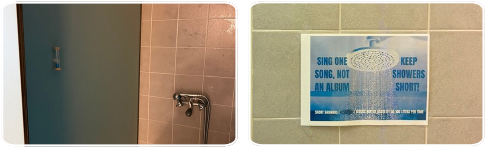
Moreover, to influence personal habits and promote behavioral change, YCG leveraged the regatta as an opportunity to introduce lasting sustainability measures within facilities. Behavioral cues were introduced in the changing rooms to encourage sailors to limit shower duration, including the installation of an interactive hourglass timing game. This initiative allowed participants to track their shower time and promoted adherence to the optimal five-minute limit. The hourglass game was supported by educational signage. Following the regatta, the installation was retained as a permanent feature, ensuring continued water conservation awareness and impact beyond the event itself.
Complementing the abovementioned on-site interventions, social media channels amplified the club’s sustainability message through posts sharing sustainability facts and insights, fostering awareness and active involvement.
9. Serve Local Food or Source Seafood Sustainably
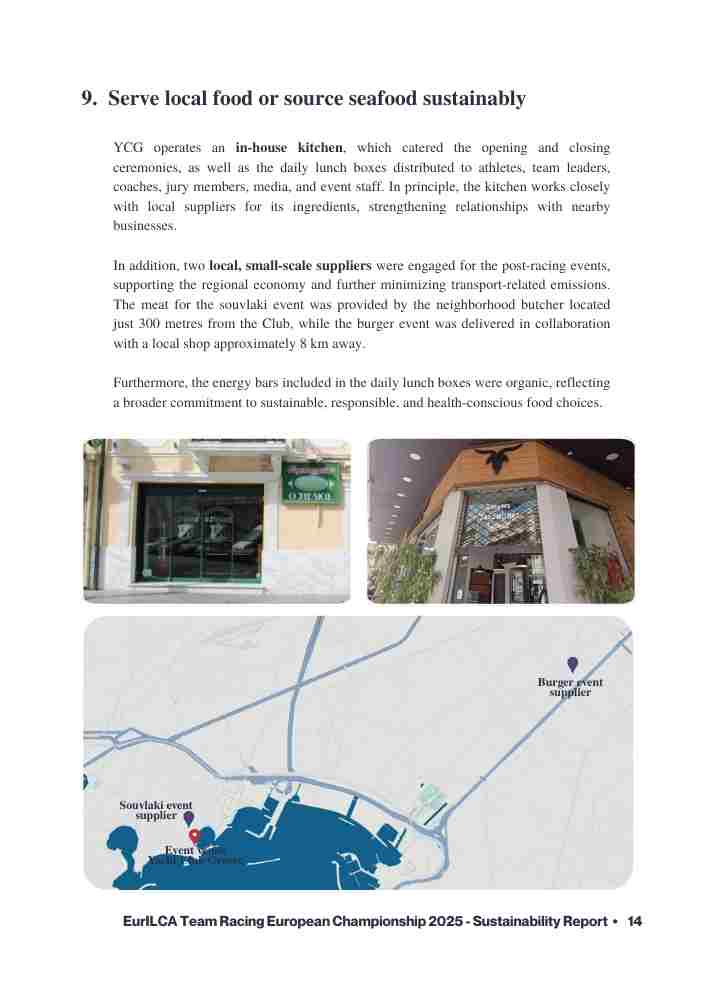
YCG operates an in-house kitchen, which catered the opening and closing ceremonies, as well as the daily lunch boxes distributed to athletes, team leaders, coaches, jury members, media, and event staff. In principle, the kitchen works closely with local suppliers for its ingredients, strengthening relationships with nearby businesses.
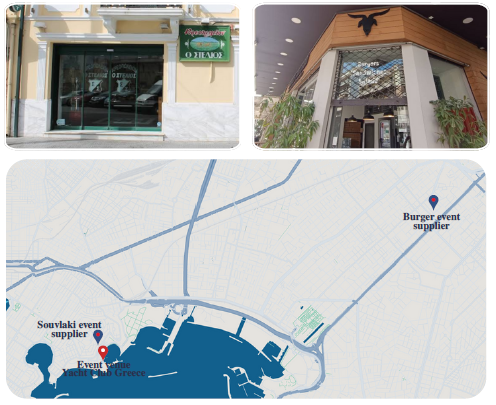
In addition, two local, small-scale suppliers were engaged for the post-racing events, supporting the regional economy and further minimizing transport-related emissions.
The meat for the souvlaki event was provided by the neighborhood butcher located just 300 metres from the Club, while the burger event was delivered in collaboration with a local shop approximately 8 km away.
Furthermore, the energy bars included in the daily lunch boxes were organic, reflecting a broader commitment to sustainable, responsible, and health-conscious food choices.
10. Organize a Green Team
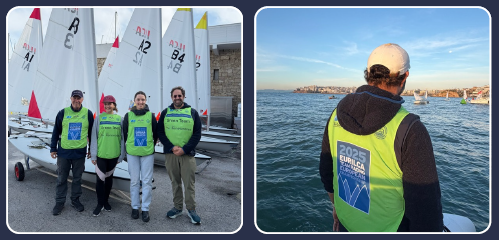
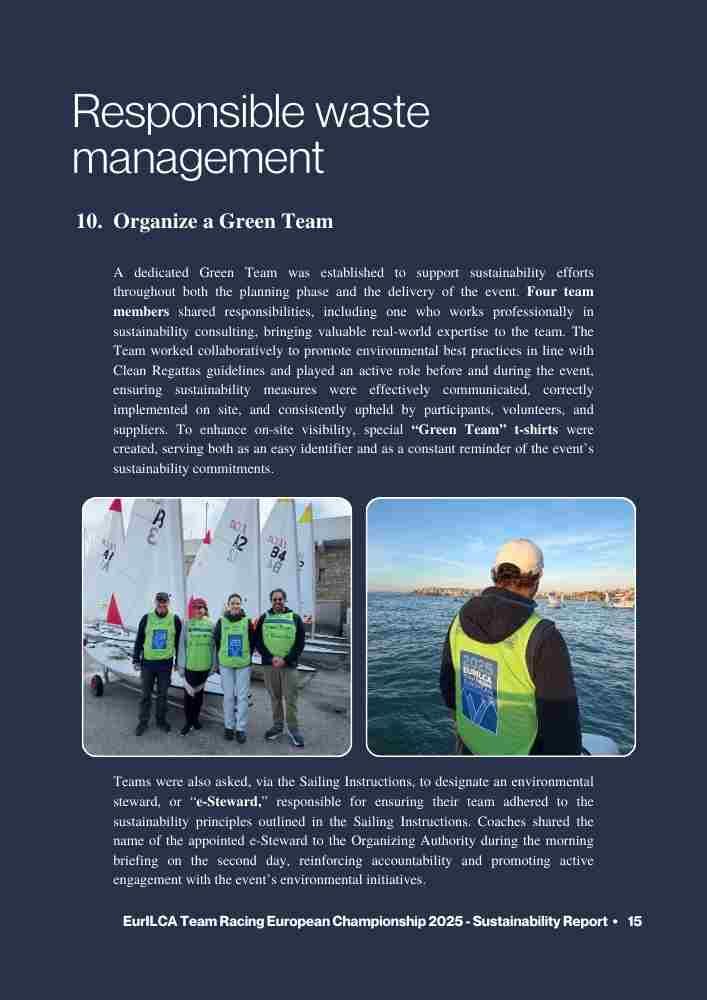
A dedicated Green Team was established to support sustainability efforts throughout both the planning phase and the delivery of the event. Four team members shared responsibilities, including one who works professionally in sustainability consulting, bringing valuable real-world expertise to the team. The Team worked collaboratively to promote environmental best practices in line with Clean Regattas guidelines and played an active role before and during the event,
ensuring sustainability measures were effectively communicated, correctly implemented on site, and consistently upheld by participants, volunteers, and suppliers. To enhance on-site visibility, special “Green Team” t-shirts were created, serving both as an easy identifier and as a constant reminder of the event’s sustainability commitments.
Teams were also asked, via the Sailing Instructions, to designate an environmental steward, or “e-Steward,” responsible for ensuring their team adhered to the sustainability principles outlined in the Sailing Instructions. Coaches shared the name of the appointed e-Steward to the Organizing Authority during the morning briefing on the second day, reinforcing accountability and promoting active engagement with the event’s environmental initiatives.
11. Ensure Proper Waste Bin Placement and Signage
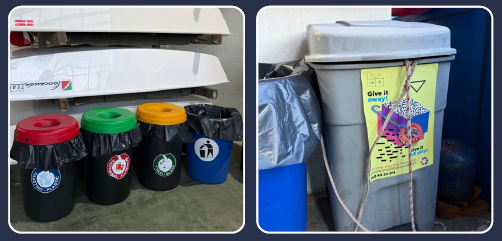
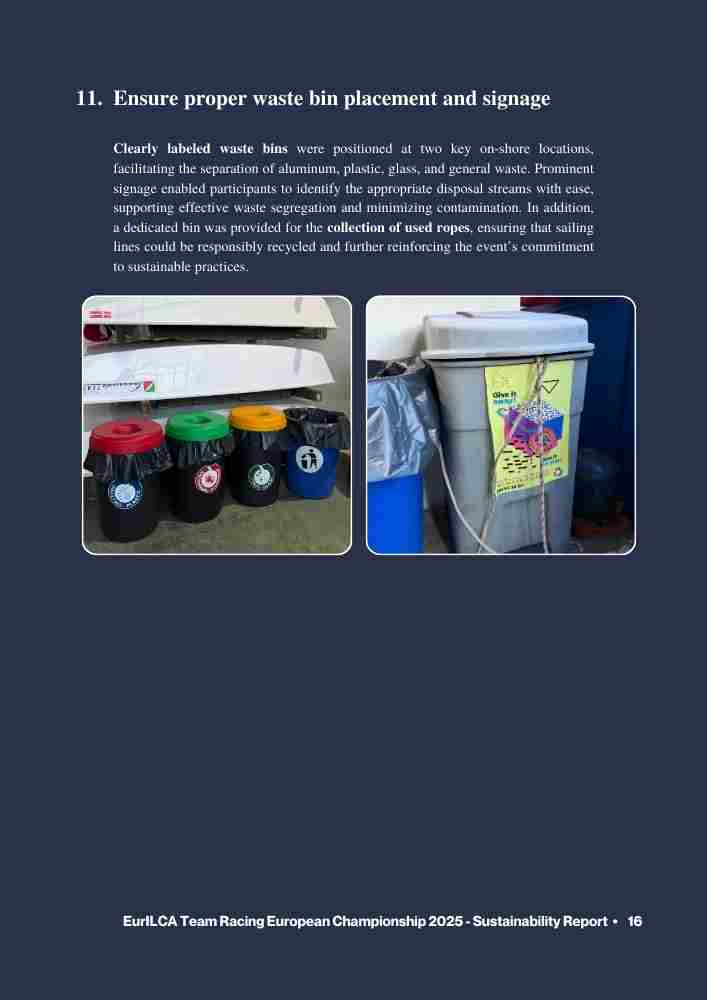
Clearly labeled waste bins were positioned at two key on-shore locations, facilitating the separation of aluminum, plastic, glass, and general waste. Prominent signage enabled participants to identify the appropriate disposal streams with ease, supporting effective waste segregation and minimizing contamination. In addition, a dedicated bin was provided for the collection of used ropes, ensuring that sailing lines could be responsibly recycled and further reinforcing the event’s commitment to sustainable practices.
12. Divert Food Waste from the Landfill
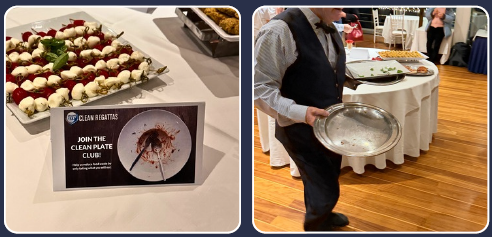
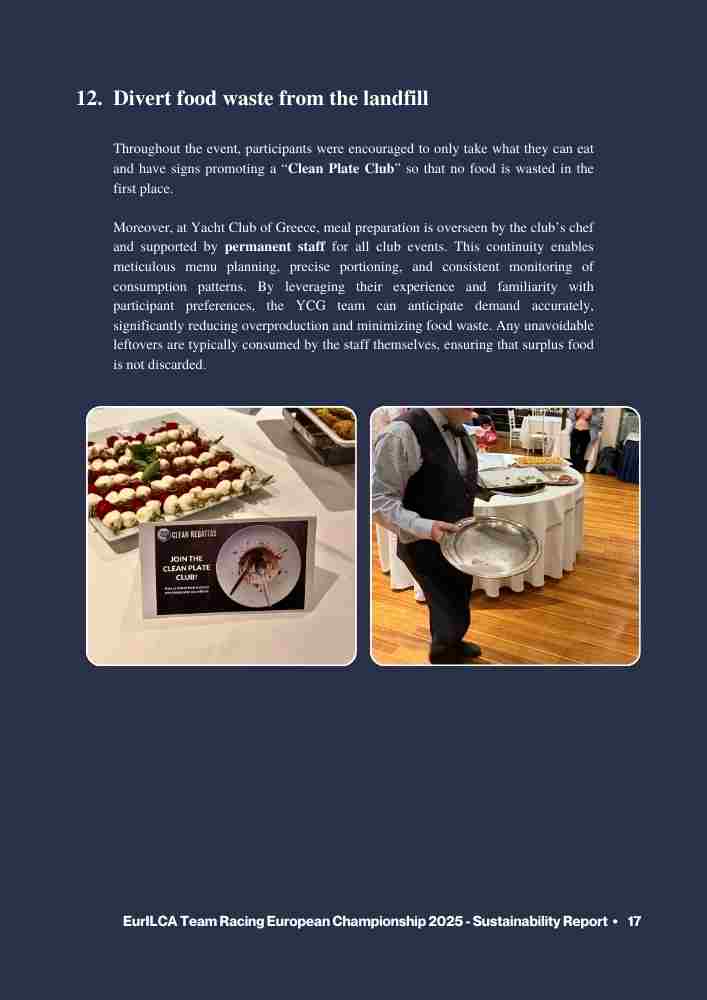
Throughout the event, participants were encouraged to only take what they can eat and have signs promoting a “Clean Plate Club” so that no food is wasted in the first place.
Moreover, at Yacht Club of Greece, meal preparation is overseen by the club’s chef and supported by permanent staff for all club events. This continuity enables meticulous menu planning, precise portioning, and consistent monitoring of consumption patterns. By leveraging their experience and familiarity with participant preferences, the YCG team can anticipate demand accurately, significantly reducing verproduction and minimizing food waste. Any unavoidable leftovers are typically consumed by the staff themselves, ensuring that surplus food
is not discarded.
13. Use Paperless Event Management
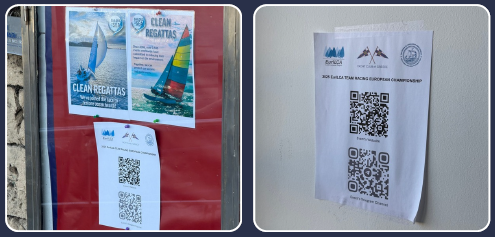
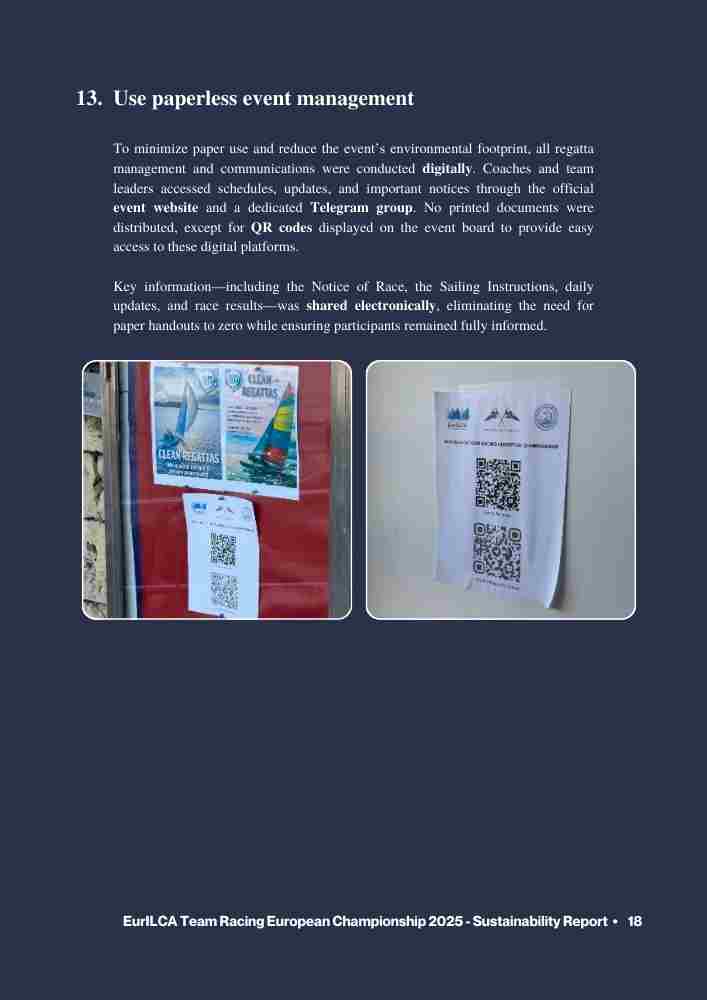
To minimize paper use and reduce the event’s environmental footprint, all regatta management and communications were conducted digitally. Coaches and team leaders accessed schedules, updates, and important notices through the official event website and a dedicated Telegram group. No printed documents were distributed, except for QR codes displayed on the event board to provide easy access to these digital platforms.
Key information—including the Notice of Race, the Sailing Instructions, daily updates, and race results—was shared electronically, eliminating the need for paper handouts to zero while ensuring participants remained fully informed.
14. Host a Beach or Marina Cleanup
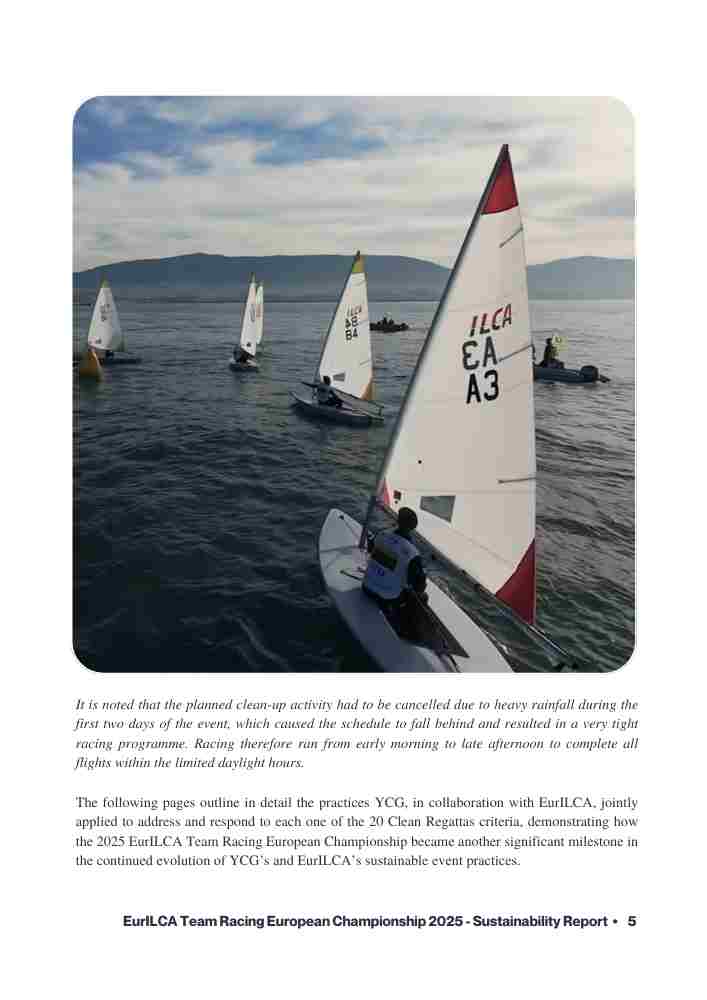
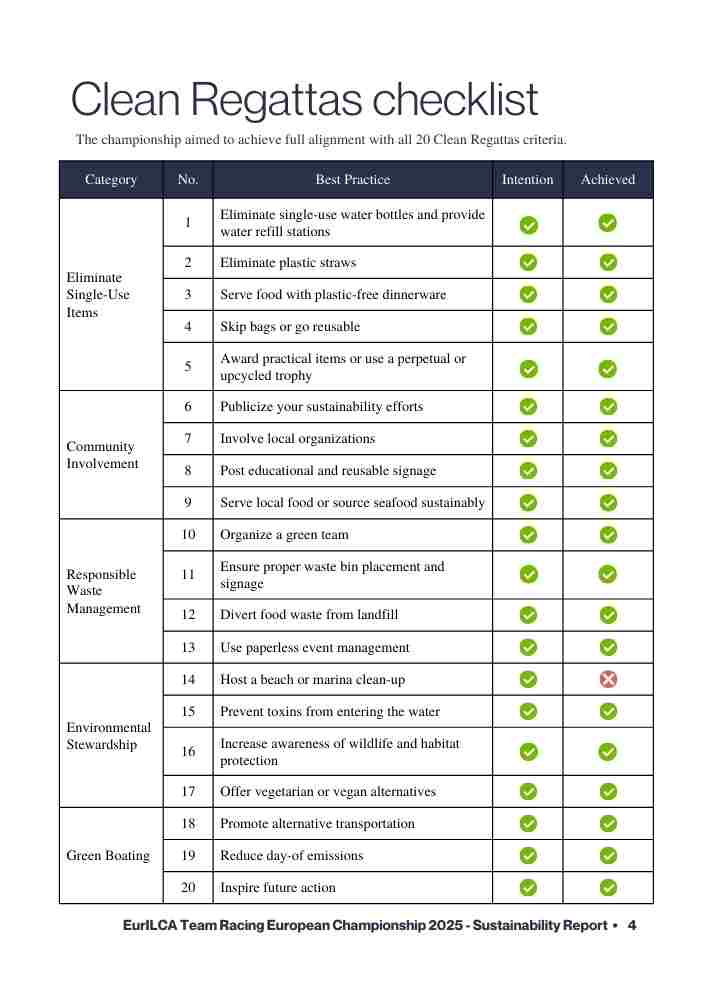
The Green Team had planned a 30-minute clean-up activity to restore and protect the boat park and its surrounding coastal environment, while fostering environmental awareness among participants. However, the first two days of the regatta were marked by heavy rainfall, making outdoor activities unfeasible. This, combined with a compressed racing schedule—races ran from early morning to late afternoon to make the most of the limited daylight in December—left no opportunity to reschedule the clean-up.
15. Prevent Toxins from Entering the Water
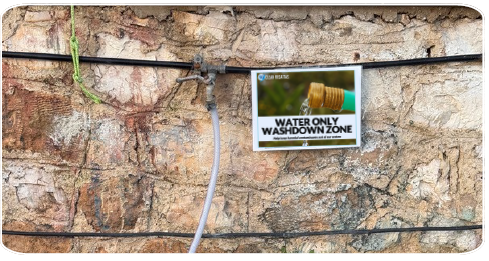
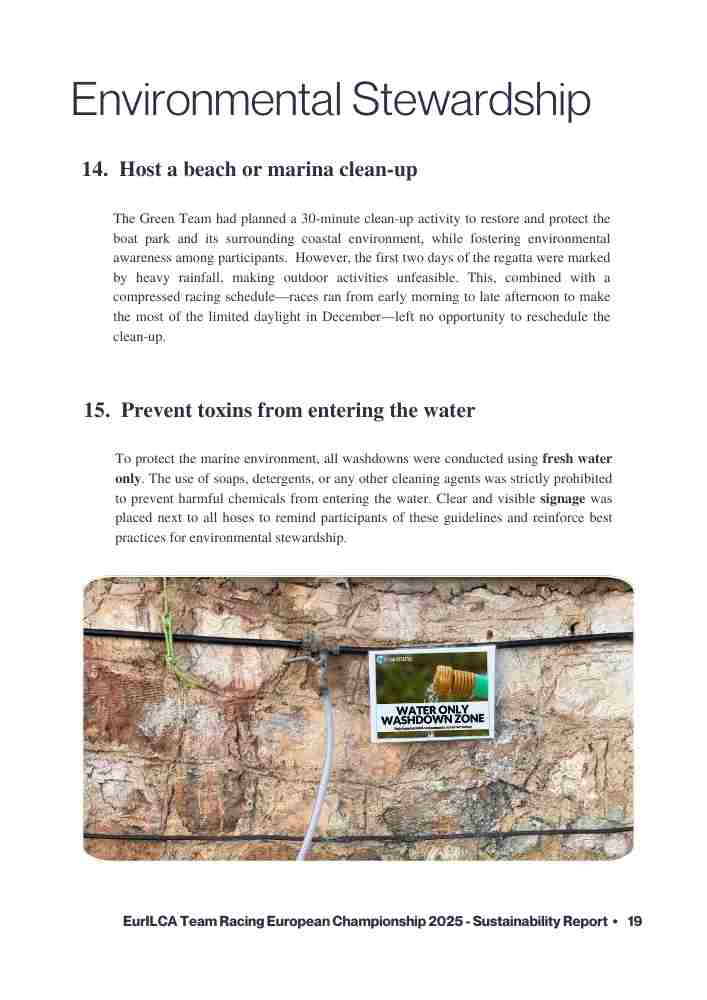
To protect the marine environment, all washdowns were conducted using fresh water only. The use of soaps, detergents, or any other cleaning agents was strictly prohibited to prevent harmful chemicals from entering the water. Clear and visible signage was placed next to all hoses to remind participants of these guidelines and reinforce best practices for environmental stewardship.
16. Increase Awareness of Wildlife and Habitat Protection
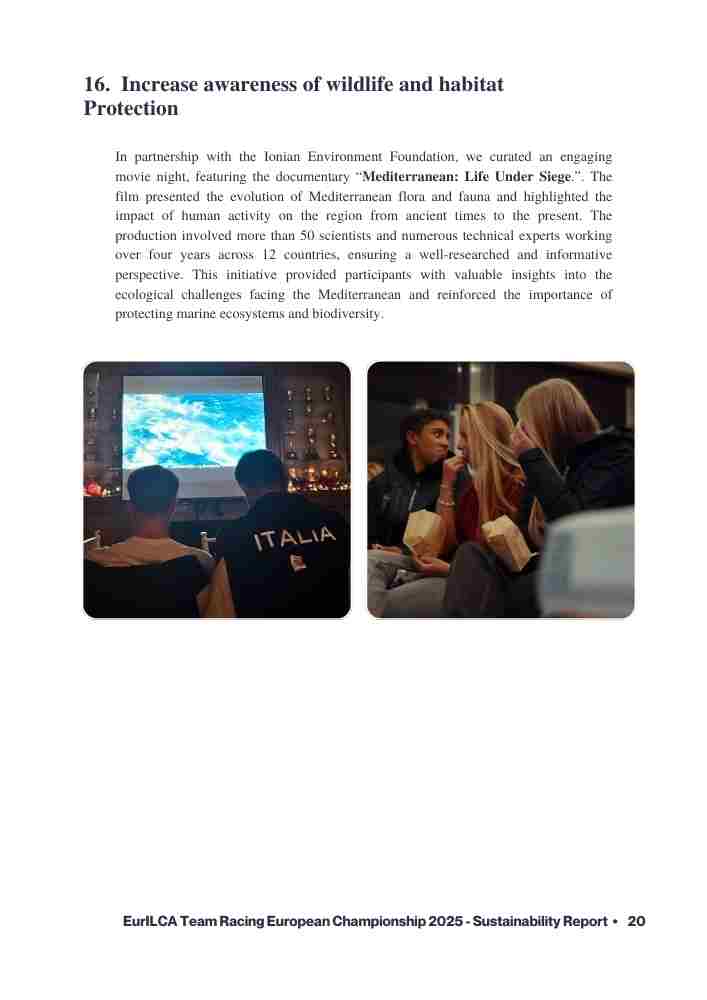
In partnership with the Ionian Environment Foundation, we curated an engaging movie night, featuring the documentary “Mediterranean: Life Under Siege.”. The film presented the evolution of Mediterranean flora and fauna and highlighted the impact of human activity on the region from ancient times to the present. The production involved more than 50 scientists and numerous technical experts working over four years across 12 countries, ensuring a well-researched and informative
perspective. This initiative provided participants with valuable insights into the ecological challenges facing the Mediterranean and reinforced the importance of protecting marine ecosystems and biodiversity.
17. Offer Vegetarian or Vegan Alternatives
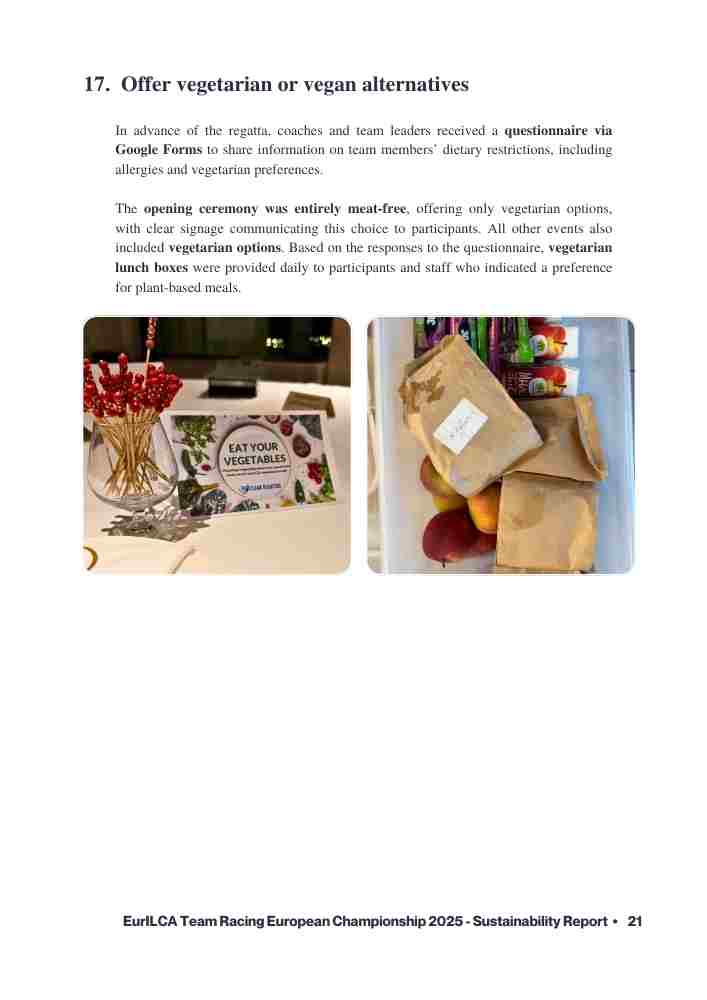
In advance of the regatta, coaches and team leaders received a questionnaire via Google Forms to share information on team members’ dietary restrictions, including allergies and vegetarian preferences.
The opening ceremony was entirely meat-free, offering only vegetarian options, with clear signage communicating this choice to participants. All other events also included vegetarian options. Based on the responses to the questionnaire, vegetarian lunch boxes were provided daily to participants and staff who indicated a preference for plant-based meals.
18. Promote Alternative Transportation
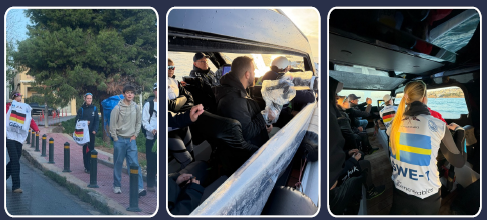
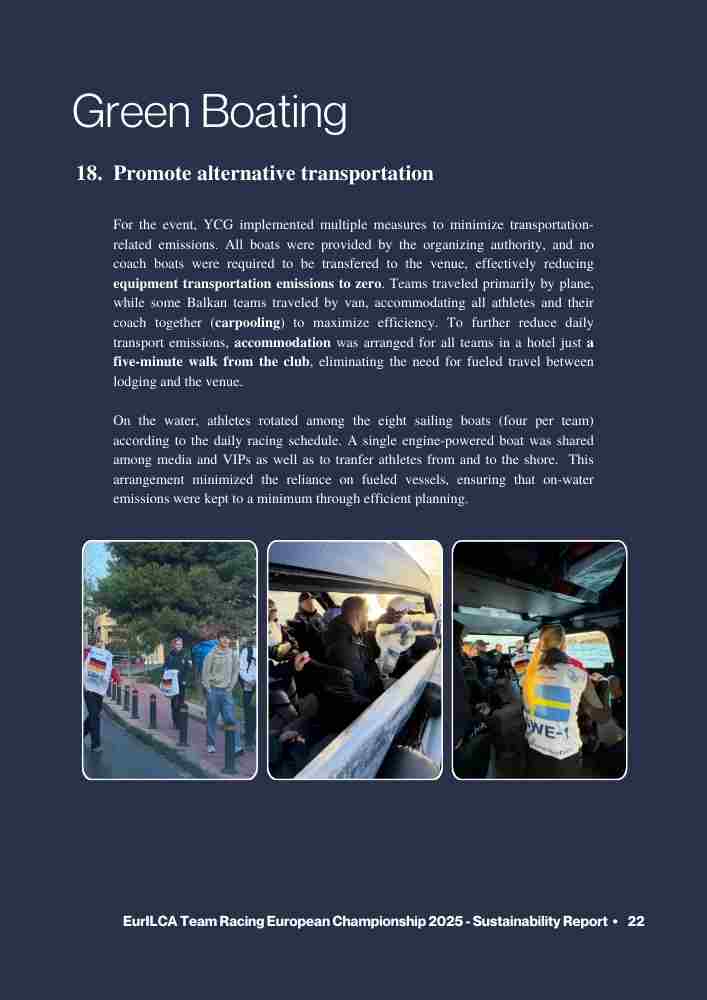
For the event, YCG implemented multiple measures to minimize transportationrelated emissions. All boats were provided by the organizing authority, and no coach boats were required to be transfered to the venue, effectively reducing equipment transportation emissions to zero. Teams traveled primarily by plane,
while some Balkan teams traveled by van, accommodating all athletes and their coach together (carpooling) to maximize efficiency. To further reduce daily transport emissions, accommodation was arranged for all teams in a hotel just a five-minute walk from the club, eliminating the need for fueled travel between lodging and the venue.
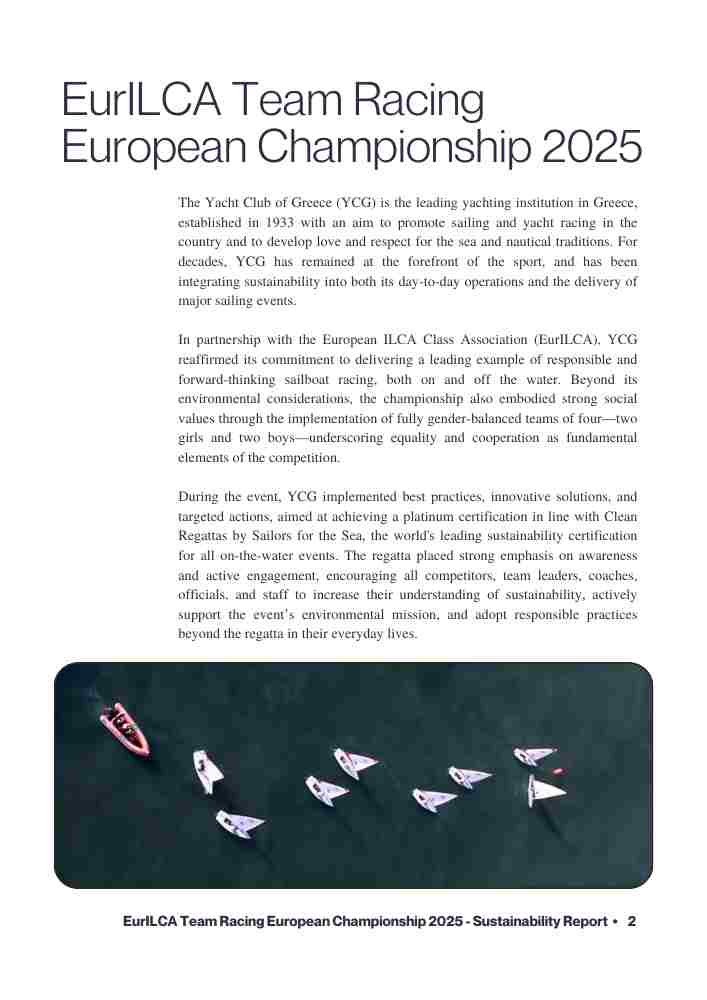
On the water, athletes rotated among the eight sailing boats (four per team) according to the daily racing schedule. A single engine-powered boat was shared among media and VIPs as well as to tranfer athletes from and to the shore. This arrangement minimized the reliance on fueled vessels, ensuring that on-water emissions were kept to a minimum through efficient planning.
19. Reduce Day-of Emissions
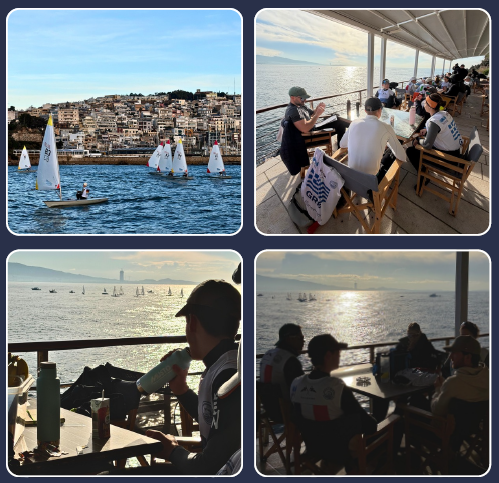
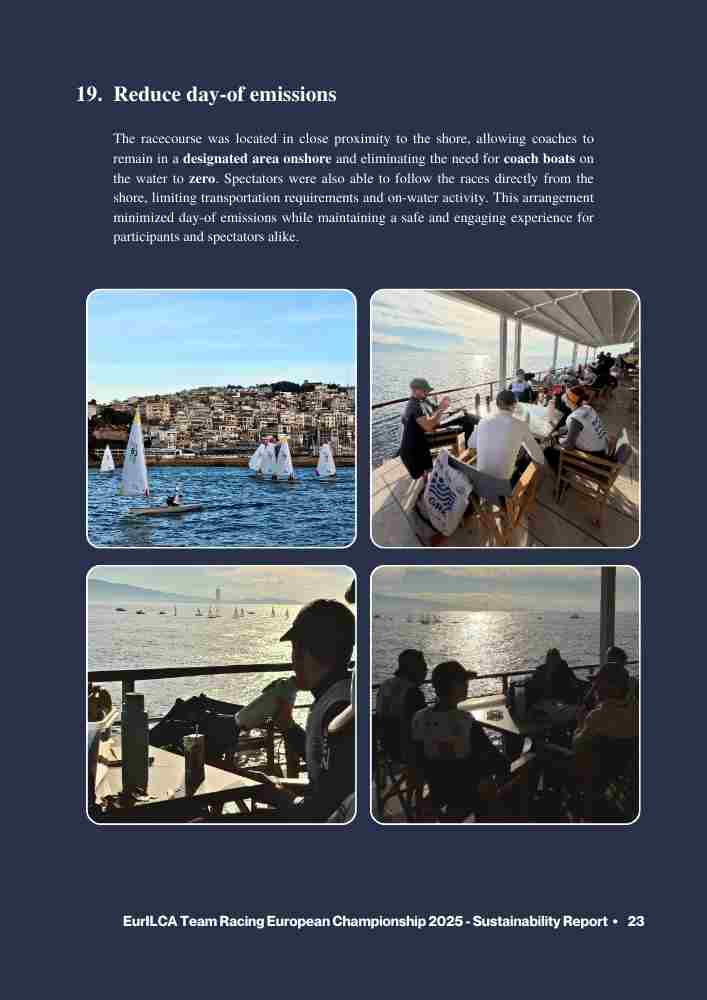
The racecourse was located in close proximity to the shore, allowing coaches to remain in a designated area onshore and eliminating the need for coach boats on the water to zero. Spectators were also able to follow the races directly from the shore, limiting transportation requirements and on-water activity. This arrangement minimized day-of emissions while maintaining a safe and engaging experience for
participants and spectators alike.
20. Inspire Future Action
The event placed a strong emphasis on environmental stewardship. Participants, coaches, team leaders and staff were encouraged to consider their environmental footprint and explore ways to advance the sustainability of sailing events. At the heart of this initiative was the dedicated Sustainability Challenge, established to recognize teams demonstrating environmental responsibility and to foster the
adoption of positive sustainability practices during the regatta and beyond. The Sustainable Team Prize was awarded to the team that most effectively embodied the event’s sustainability objectives.
As part of the challenge, each team was required to first designate and declare an environmental steward (e-Steward). This team member was responsible for ensuring alignment with the sustainability principles outlined in the Sailing Instructions.
Teams earned points based on engagement and initiatives, including:
- Participation in event sustainability activities, including educational
initiatives.
- Daily return of all issued lunch boxes to minimize waste.
- Submission of a creative idea addressing key sustainability challenges
in future sailing events. The ideas were collected via a Google Forms which was sent to coaches on the evening before the final racing day.
The European Sustainability Challenge Green Prize was awarded to the highestscoring team and consisted of a practical prize: bags crafted from repurposed sails for all four sailors and the coach.
20. Inspire Future Action
Sustainability Report

Documents
- YCG_EurILCA_Sustainability-Report_compressed.pdf – 20. Inspire Future Action


